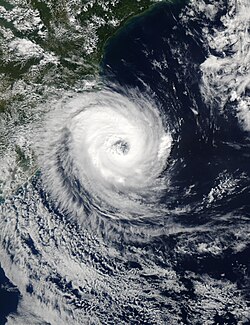
On March 27, 2004, meteorologists in Brazil and at the National Hurricane Center were confronted with an unusual and unexpected event as the first hurricane ever observed in the South Atlantic Ocean formed off the southern coast of Brazil. Prior to this storm, no hurricanes had been documented in the region during the satellite era, which began in the 1960s, making the system highly unusual and difficult to classify. Tropical cyclones rarely develop in the South Atlantic primarily because the region lacks an Intertropical Convergence Zone, which normally provides the atmospheric convergence and vorticity needed for storm development. In addition, strong vertical wind shear across the basin typically disrupts any developing systems. The storm began as a subtropical low but gradually developed tropical characteristics as it drifted over warm ocean waters. As the system strengthened and approached the Brazilian coast, it was named Hurricane Catarina after making landfall in the state of Santa Catarina. Satellite estimates indicated that maximum sustained winds at landfall were approximately 75 to 80 miles per hour. Because storms of this type had essentially never been observed in the region, there was considerable confusion about issuing warnings since no established warning agency had jurisdiction over South Atlantic tropical cyclones. Fortunately, the storm was relatively small and affected an area without large cities, and because of limited observations, the exact intensity of the hurricane at landfall may never be fully known.