Today, June 1st, marks the beginning of the Atlantic Hurricane Season. So let’s talk about the forecast, preparedness, and names.
FORECAST
NOAA is forecasting a below-normal Atlantic Hurricane Season. They call for a 70% chance of 8-14 named storms (tropical storms to hurricanes), including 3-6 hurricanes, and around 1-3 major hurricanes (Cat 3+). More specifically, they are predicting a 55% chance of a below-normal season, a 35% of a near-normal season, and only a 10% of an above-normal season. The reasoning behind a higher confidence in a below-average season is the presence of an El Niño, a large-scale oscillation often associated with lower Atlantic hurricane activity. El Niño causes more shear in the Atlantic, which is unfavorable for hurricanes. Additionally, some other conditions like warmer sea-surface temperatures, weaker trade winds, and weaker vertical wind shear will be present, but not as strongly as they have been in recent years, which have been usually active. Lastly, precipitation in Africa is expected to be further inland and northward than usual, which is not favorable for storm development. If one or more of these factors do not behave as expected, a more active season could occur. For example, a later/weaker El Niño, stronger formation conditions, or offshore precipitation near Africa pose issues to this forecast.
SAFETY
Despite a below-average forecasted season, it is imperative to remember that it takes only one storm to cause tragic consequences. So it’s important to prepare now, early in the season.
Here’s a list of things to do to make sure you’re prepared for the season:
Create an evacuation plan
– Good destination example: stay with a family member or a friend in a well-built home away from flood-prone areas
– Plan several routes, as some may be closed
– Bring pets! Make sure your destination is pet-friendly
– No vehicle? Check with local authorities to see available transportation options
Gather supplies
– Create a kit, specific to whether you are evacuating or staying in place
– Kits should at least include basic supplies such as water, food, a flashlight, a first aid kit, a battery-powered weather radio, a whistle, house/car keys, and prescription medications
Check in on insurance
– Call your insurance company and ensure your plan covers repairs/replacing your home
– Ensure you have a flood insurance plan – home/renter’s insurance doesn’t cover flooding
– Spend time documenting your possessions and anything you would claim to your insurance if they get damaged/destroyed
Communication
– Settle on a meeting place with family/friends in case of an evacuation
– Ensure everyone has a list of emergency contacts
Strengthen your home
– Trim tree limbs
– Install storm shutters
– Secure outside wall openings
– Buy plywood or other materials to board up windows now! Not when everyone else is trying to a week before a storm
– Remember that impacts can be felt far inland
NAMES
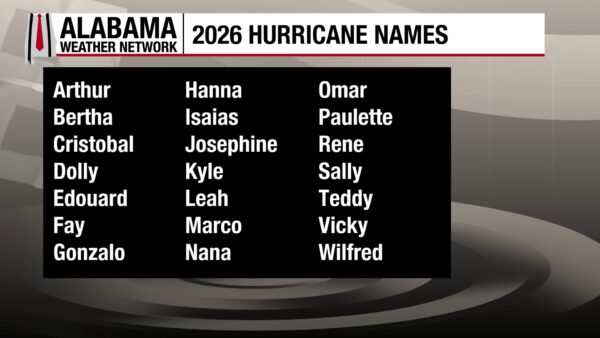
Below is a list of this year’s names:
Here at the Alabama Weather Network, we will watch the tropics vigilantly and bring you the most up-to-date forecast information as possible during the hurricane season, and always. Check alabamaweathernetwork.com, watch us on YouTube, Instagram, Facebook, TikTok, and X, stream us on Roku, Apple TV, Firestick TV, and subscribe to the daily newsletter to receive daily tropical updates. We post tropical updates through the Atlantic Hurricane Season, which ends November 30.