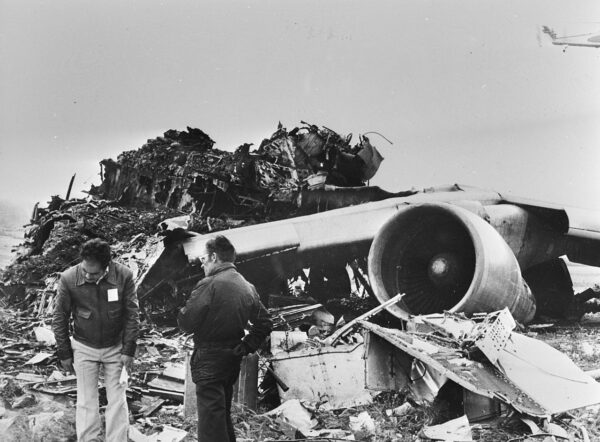
On March 27, 1977, a chain of unusual circumstances led to the deadliest commercial aviation accident in history on the island of Tenerife in Spain’s Canary Islands. KLM Flight 4805, a chartered Boeing 747 traveling from Amsterdam to Las Palmas, and Pan American Flight 1736, flying from Los Angeles to Las Palmas with a stop in New York, were both diverted to Los Rodeos Airport after terrorists planted bombs at Las Palmas Airport and one detonated in the passenger terminal. The sudden diversion created severe congestion at the smaller airport. Weather conditions were highly variable, with dense fog repeatedly sweeping across the airfield, drastically reducing visibility. The airport also lacked ground radar, runway lighting was not functioning, and communication between pilots and air traffic control was complicated by radio interference and language differences. As the situation developed, the KLM aircraft arrived first and unloaded its passengers, while the Pan Am jet arrived shortly afterward but had no available gate. Once Las Palmas reopened, both aircraft prepared to depart. Because the airport had only one main runway, both aircraft were instructed to taxi along Runway 12 before departing. The Pan Am aircraft was supposed to exit the runway onto a taxiway, but in the heavy fog the crew missed their turn and continued farther down the runway. Meanwhile, the KLM crew began their takeoff sequence after reading back instructions from the control tower. During this exchange, simultaneous radio transmissions prevented the crew from hearing a command from the tower, instructing them to hold position. Believing the runway ahead was clear; the KLM jet began its takeoff roll while the Pan Am aircraft was still on the runway. As the KLM aircraft accelerated, the Pan Am crew suddenly saw its landing lights approaching through the fog and attempted to turn off the runway while the KLM pilot tried to lift off early. The KLM aircraft struck the upper section of the Pan Am jet, slammed back onto the runway, and slid several thousand feet before erupting in flames. All passengers and crew aboard the KLM aircraft were killed, while 70 people escaped from the Pan Am jet, including seven of its 16 crew members. Rescue operations were slowed by the dense fog, and the disaster ultimately claimed 583 lives, making it the deadliest accident in the history of commercial aviation