Meteotsunamis. Sound pretty scary, don’t they?
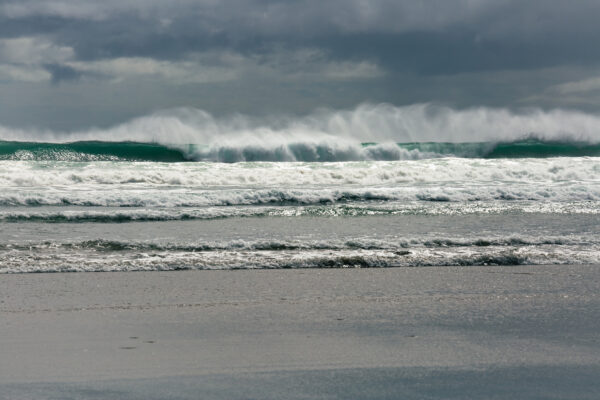
Meteotsnuamis are not tsunamis that happen at the same time a meteor strikes. Rather, they are large waves caused by disturbances in the atmosphere, i.e., the weather. The air pressure disturbances associated with squall lines, severe thunderstorms, and other strong weather systems form waves that are intensified by the coastal features that make the area under the wave shallower. These waves can reach heights of more than six feet, occur in most large bodies of water (lakes, bays, oceans), and occur around the world.
They can often be confused or grouped with other wave phenomena, such as storm surge and seiches, which are their own beasts. Storm surge is a progressive, completely wind-driven wave. A seiche (pronounced saysh) is a standing wave driven primarily by winds and influenced somewhat by pressure. Lastly, meteotsunamis are progressive waves driven mostly by pressure differences and influenced by wind. Despite the differences in cause and type of wave, all three have something in common: they can be deadly.
A few notable meteotsunamis include: a 19-foot wave in the Vela Luka area in Croatia that struck in 1978, a 16-foot wave in Nagasaki Bay in Japan that washed on shore in 1979, killing 3 people, and a 9.8-foot wave in Chicago from Lake Michigan that killed 8 in 1954. The wave hit the Chicago waterfront and swept people off the piers.
Meteotsunamis are still being understood. We are working towards a future where warnings can be issued and tragedies can be prevented.