John Hiatt sang…
We were always looking for true north
With our heads in the clouds, just a little off course
I left the motor running, now if you’re feeling down and out
Come on baby drive, come on baby drive south, come on baby drive south
And that’s what we are doing tonight…driving south on I-65 toward Montgomery and eventually Florida’s Space Coast.
Hopefully we will have a rendezvous with the STS-119, the Space Shuttle Discovery as it lifts off from the Kennedy Space Center Sunday evening. Launch forecasters say there is an 80% chance of good weather at the planned launch time of 7:43 p.m. EDT.
I have a homework assignment for you guys: tell me all about Cocoa Beach…the cool places to eat…the things to see.
I will update you through the weekend about the latest on the Shuttle and our weather back home in Alabama.
In a word, it is going to be wet.
Rain continues tonight across roughly the northern half of the state of Alabama, generally along and north of I-59.
Back in Mississippi, literally the entire state is socked in with moderate rain. Only the extreme south and southeast is dry at this hour.
Rainfall amounts have been generally light so far, although radar estimates indicate a large area of 1-3 inches of rain over eastern Lowndes County, Mississippi into Lamar and Pickens Counties in Alabama. Amounts of up to an inch have fallen across Marion, Winston, northern Cullman, Morgan and Marshall Counties down into Etowah and southern Cherokee Counties.
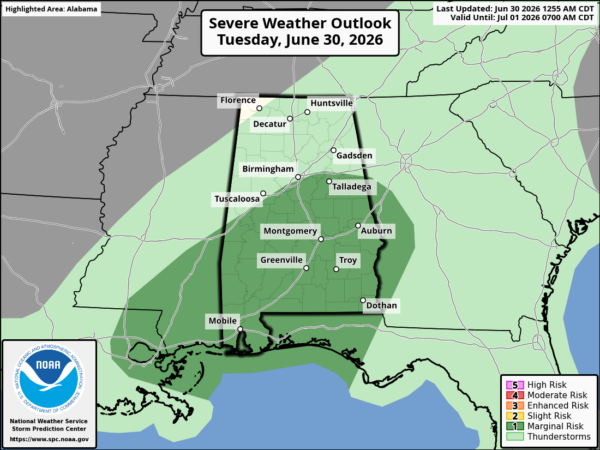
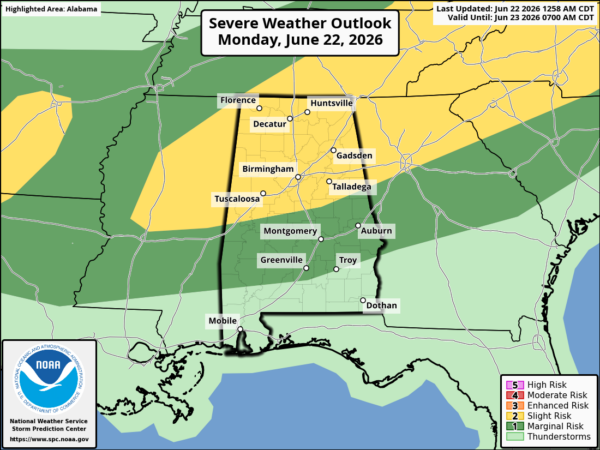
The rain will spread further south through the overnight hours and get heavier. No severe weather, probably not even any thunder…the airmass too stable.
Flash flood watches are in effect for eastern Mississippi. I doubt we will see any flooding since the rain is going to be of a light to moderate nature. But it could rain through noon or early afternoon tomorrow across Central Alabama. Rainfall amounts should average one and one half to two inches, with some two to four inch amoutns mainly over West Alabama.