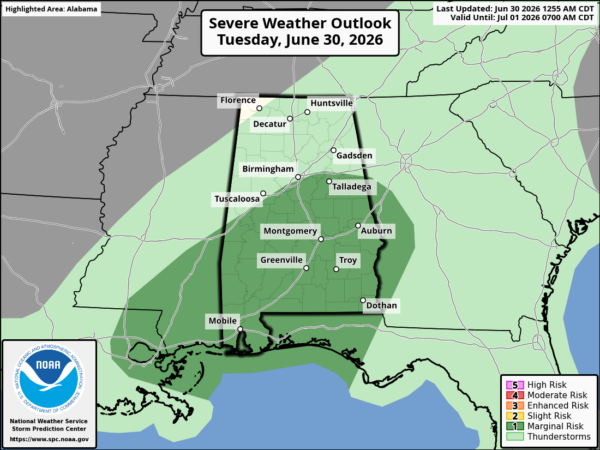
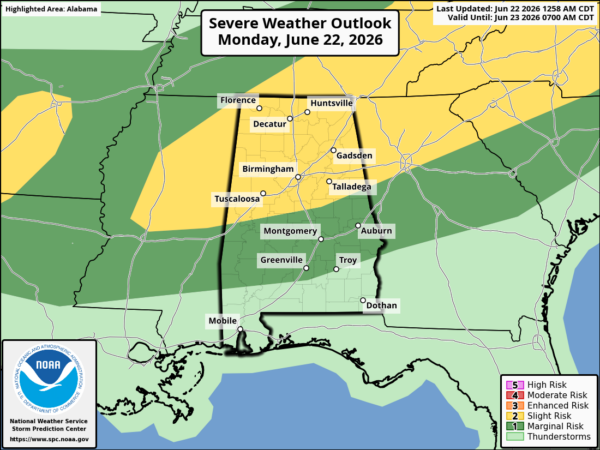
This month’s edition of the National Weather Association features an interview with Storm Prediction Center Director Joe Schaefer.
Schaefer says the Storm Prediction Center is working to make their forecasts more relevant to the public. One experiment for this summer is to create probabilistic non-severe thunderstorm forecasts in four, four hour segments and an 8 hour forecast for hours 16-24.
He says one of the biggest challenges facing forecasters at SPC is having the time and ability to digest and assimilate the greatly increased data available from numerical forecast models. One example of an improvement that has created new challenges is simulated radar displays. Some of the models can now produce simulated radar images that look like the real thing. Forecasters can easily forget they are looking at a numerical prediction and give it more credibility. They still have to be able to differentiate between model created data and real world weather data.
Forecasters still have to keep their situational awareness, and determine how weather patterns will evolve. It is not enough to speak in generalities and probabilities, but forecasters have to be able to communicate the various forms and modes that sensible weather will take on. For example, in a severe weather event, it is not enough just to forecast that severe storms will happen, but it is critical to determine where the modes will be.
One development at SPC that Schaefer spoke of is experimental simulated satellite imagery. This is another idea that will help forecasters gets their hands around what the model is thinking and help them to more easily spot potential trends in the output.