I received this press release yesterday from UAH… this
involves research done by our friend Tim Coleman on a
subject that has been quite a mystery for many of us in
the weather business. Tim just sent his powerpoint files
to us this afternoon; I am really looking forward to seeing
all of his findings!
************************************************
Giant waves of air rippling through the atmosphere might
spin up or intensify tornadoes when they interact with
powerful thunderstorms.
One such wave rolling through a December 2000 line of storms in Alabama
might have contributed to the sudden appearance of an F4 twister within
minutes after the wave passed, according to Tim Coleman, a research
meteorologist and doctoral student at UAH. That tornado later hit
Tuscaloosa.
This was not an isolated case, Coleman says. “There are a decent number of
cases where there is some possible wave interaction with tornadoes.”
Coleman is scheduled to present his preliminary research findings at the
American Meteorological Society¹s Conference on Severe Local Storms in St.
Louis on Monday.
In addition to their interaction with tornadoes, these atmospheric waves —
also called “gravity waves” — may interact with fast-moving squall lines,
might influence rain and snowfall, and can cause local high speed,
straight-line wind damage.
While Coleman’s National Science Foundation and NOAA-funded study of gravity
waves is in its early stages, his long term goal is to develop tools to
improve short range forecasts of violent weather, including tornadoes.
“If we can figure out how it works, our goal will be to teach the (National
Weather Service) meteorologists and the TV meteorologists how to see when
these things are coming so they can get warnings out in time,” said Coleman,
himself a former Birmingham TV weatherman. “There are still a lot of
questions to answer, but I’m optimistic.”
One of the first surprises the researchers found was that gravity waves “are
really quite common,” said Dr. Kevin Knupp, a professor of atmospheric
science and the leader of UAH’s severe weather research team. “A lot more
common than we thought.”
Gravity waves are caused by air flowing over mountains, by wind shear,
thunderstorms and imbalances in the atmosphere. Air is a fluid, like water,
and waves are created when the flow of fluid is interrupted. As wind blows
toward a tall mountain, for instance, air that hits the mountain is forced
upward. As this crest of air clears the mountain, it is cold and dense.
Gravity pulls this cold, dense air mass downward, hence “gravity wave.”
This up and down motion can set up gravity waves which continue through the
atmosphere for hundreds of miles.
While much is not known about how these waves interact with powerful storms,
Coleman and Knupp have discovered that the angle at which the two collide
seems to have a strong influence: If the wave and the storm collide head on,
there is little or no effect. If the gravity wave hits the storm front at an
angle, however, that is when the waves seem to have their greatest influence
on tornadoes.
Exactly how gravity waves amplify tornadoes is not known, but Coleman has
theories that he will test.
“We think there are two processes at work here,” he said. “Ahead of the
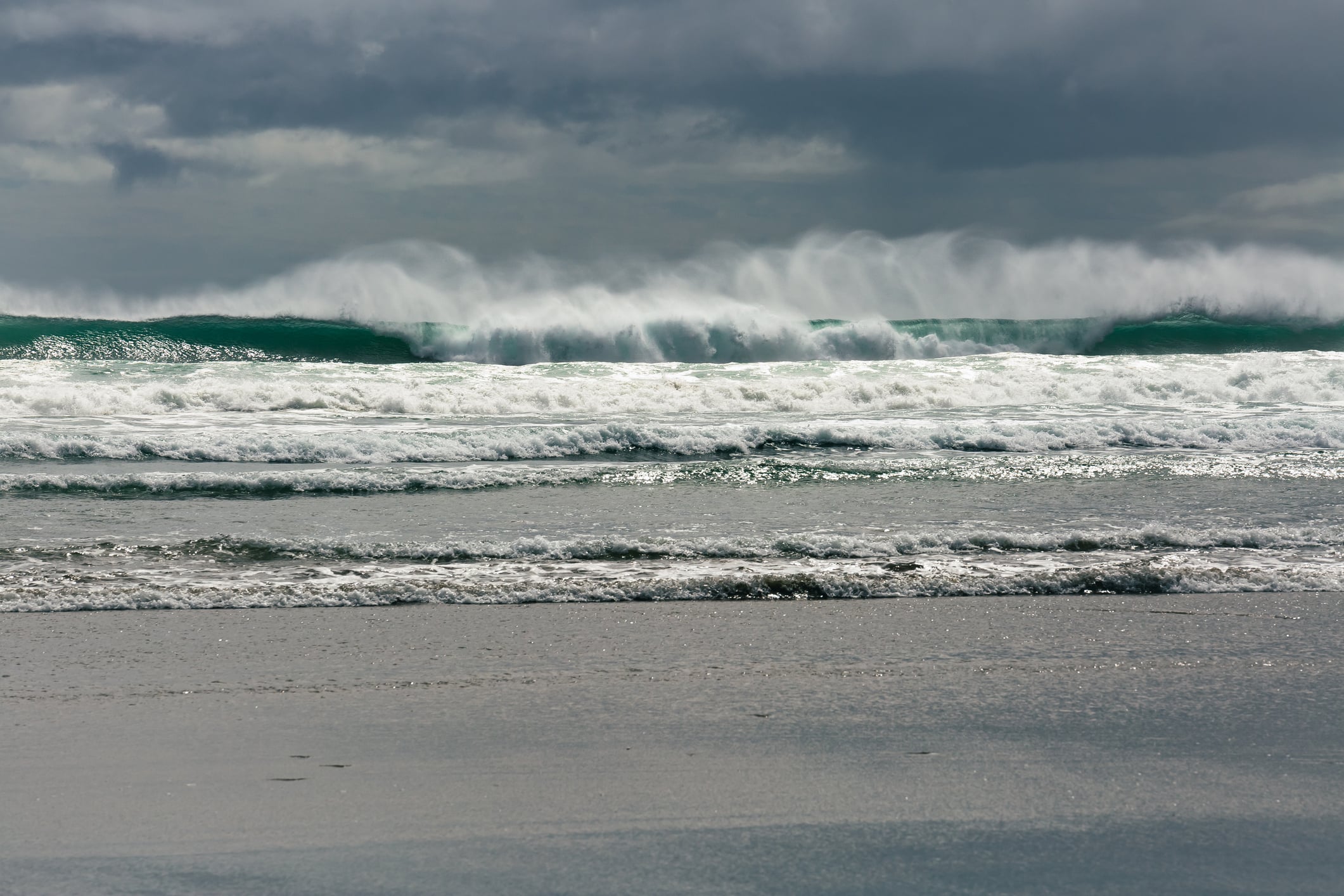
crest of the wave you have a convergence of fluid, like water at the beach
being drawn toward an approaching wave. This convergence might enhance the
spin of anything that is already be spinning.
“Because it creates pressure between the wave moving in one direction and
the air rushing toward the wave, the convergence might also squeeze a spin
so it will be smaller but spin faster, like a skater tucking in her arms. It
might make a rotating circulation smaller and more intense.”
This pattern shows up in the Doppler radar images of a storm that hit
Fayette County, Alabama, in January 1999.
“There are several of the major tornadoes in the south in the past decade
that when we go back and look, there might have been a gravity wave
involved,” Coleman said. “The Dec. 16, 2000, Tuscaloosa storm was moving up
I-59 without forming any tornadoes. Then it interacted with a gravity wave
and it spun out a tornado.”
In another case, Doppler radar picked up the signature of a tornado in
storms going through Central Alabama on April 8, 1998.
“That tornado went from F1 to F4 within a couple of miles and a few minutes
after a possible gravity wave went through,” said Coleman, who still lives
in Birmingham. “You still don’t know for sure that (the wave) caused it, but
it did happen together.”
That April 1998 tornado later grew into an F5 twister than killed more than
30 people in Birmingham.